
How a pet insurance claim actually gets paid — reimbursement or direct pay — matters just as much as what it covers — and the two models work very differently at the moment you’re standing at the checkout counter with an anxious pet and a vet bill in hand.
How the Reimbursement Model Works
This is how the large majority of pet insurance policies operate:
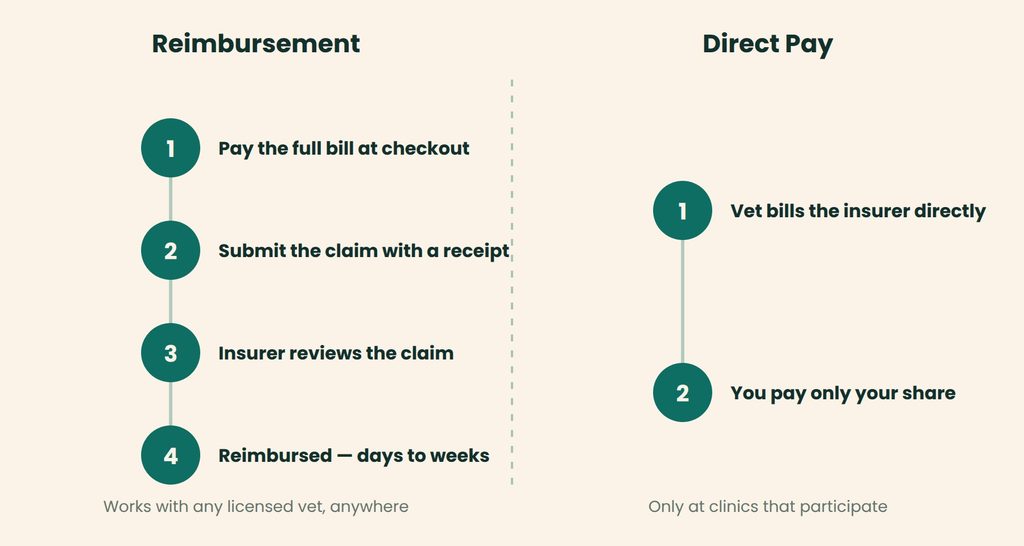
- You pay the full vet bill yourself, at the time of service, the same as if you had no insurance.
- You submit an itemized invoice to your insurer — almost always through a phone app or online portal now, usually just a photo of the receipt.
- The insurer reviews the claim against your policy’s coverage, deductible, and reimbursement rate.
- You’re paid back, typically by direct deposit, within a window that ranges from a few days to a couple of weeks depending on the company and how complete your submission was.
The practical downside is upfront cash flow: even with great coverage, you need to be able to pay a $4,000 surgery bill today and wait for reimbursement, rather than only paying your share on the spot.
Direct Pay / Pay-at-Checkout Options
A smaller number of providers — Trupanion is the best-known example — offer direct payment at partnering veterinary clinics. When it’s available and the clinic participates, the insurer pays their portion straight to the vet, and you only pay your share (your deductible plus your percentage of the bill) at checkout, similar to how a co-pay works with human health insurance.
The catch is that direct pay isn’t universal even among providers that offer it: it depends on whether your specific clinic has signed up to participate in that insurer’s direct-pay network, which not every vet’s office has.
Typical Claim Turnaround Times
For the reimbursement model, most insurers advertise a turnaround of a few business days to two weeks, though this depends heavily on:
- Whether the paperwork submitted was complete on the first try
- Whether the diagnosis needs any additional medical records requested from the vet
- Whether the claim is straightforward or requires a closer review against pre-existing condition exclusions
Direct pay, when it’s available at your clinic, essentially removes the wait — the insurer’s portion is settled before you leave the building.
A Worked Example: Same Bill, Two Ways to Pay
A dog needs bloat surgery and the bill is $5,000 (BestMoney’s range for GDV surgery is $1,500 to $7,500). The policy has a $500 deductible and 80% reimbursement, the standard settings in MoneyGeek’s models, so the insurer’s share is ($5,000 − $500) × 80% = $3,600 and yours is $1,400.
| Reimbursement | Direct pay (participating clinic) | |
|---|---|---|
| You pay at the clinic | $5,000 | $1,400 |
| Insurer pays | $3,600, sent to you after the claim is processed | $3,600, sent to the clinic |
| Your final cost | $1,400 | $1,400 |
| Cash you need on the day | $5,000 | $1,400 |
The final cost is identical. What changes is the cash you need that day, which is why a savings buffer or a credit line matters more with reimbursement. If you often cannot front a few thousand dollars, ask your vet which insurers they work with directly before you choose, and read how a claim moves from bill to payment.
Tips for Faster Claim Approval
- Submit complete medical records the first time, including the vet’s diagnosis notes, not just the itemized invoice
- Keep your pet’s full history with one insurer where possible — switching companies can trigger extra scrutiny while the new insurer verifies nothing was pre-existing
- Use the company’s app rather than mailing paperwork, since online and app submissions avoid mailing delays
- Ask your vet’s office if they’re familiar with your specific insurer — clinics that submit records in the format an insurer expects tend to see fewer back-and-forth delays
Frequently Asked Questions
Is direct pay better than reimbursement overall? It’s more convenient when it’s available, since it removes the need to front the full bill. It isn’t necessarily cheaper or more generous — the coverage terms behind it work the same way as any other policy.
Do I need a credit card with a high limit to use a reimbursement-model insurer? It helps. Since you’re paying the full bill upfront in an emergency, having either savings or credit available for a $2,000–$5,000 bill is worth planning for regardless of which insurer you choose.
Can I ask my vet in advance whether they offer direct pay with a specific insurer? Yes, and it’s worth doing before an emergency — most clinics can tell you immediately which, if any, direct-pay networks they participate in.
The Bottom Line
Reimbursement is still the standard across the pet insurance industry, and it works fine as long as you can comfortably front a large vet bill while you wait to be paid back. Direct pay removes that cash-flow problem where it’s available, but it’s still the exception rather than the rule — check both the insurer and your specific vet clinic before assuming you’ll have it.
Sources
- MoneyGeek, Average Pet Insurance Cost for Dogs, updated September 17, 2026 (standard policy settings).
- BestMoney via MediaFeed, The 17 Most Common Pet Health Issues Will Set You Back This Much.
- Trupanion, official site, for its direct-pay-to-veterinarian option (availability depends on the clinic).
- Healthy Paws and Embrace claims pages, checked October 13, 2026, for claim submission and timelines.