Nearly every pet insurance company offers two main tiers of coverage: accident-only and accident & illness. The names sound similar, so many new pet owners choose the wrong option without realizing it. The difference is significant. An accident-only policy may cover a broken leg, but it won’t cover cancer. An accident & illness policy covers both.
What Accident-Only Coverage Includes
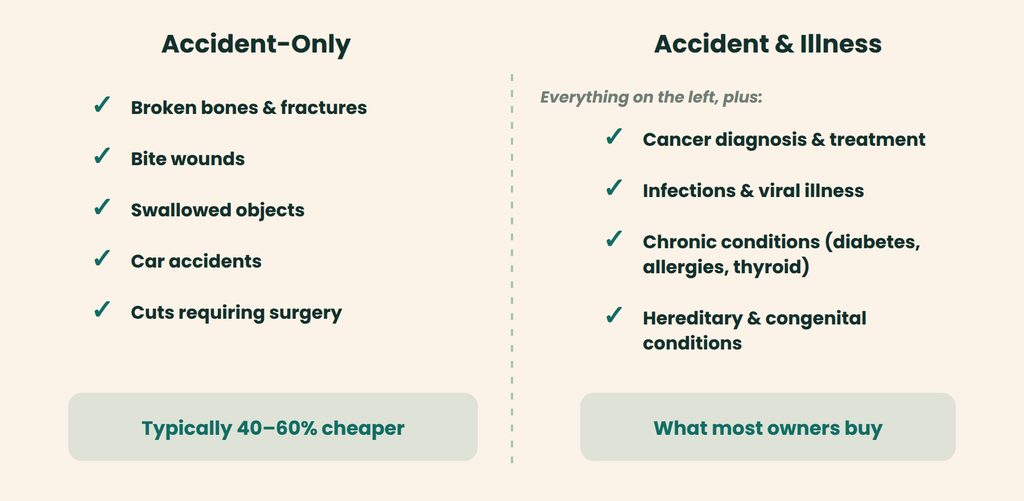
Accident-only plans are the cheaper, narrower option. They pay out for injuries that happen suddenly and unexpectedly:
- Broken bones and fractures
- Bite wounds from another animal
- A car hitting your pet
- Swallowing a foreign object (socks, toys, bones)
- Cuts requiring stitches or surgery
- Poisoning from an accidental ingestion
What accident-only plans do not cover is anything that develops over time or isn’t the result of a specific incident — no cancer, no infections, no diabetes, no chronic conditions.
What Accident & Illness Coverage Adds
An accident & illness plan includes everything above, plus:
- Cancer diagnosis and treatment
- Infections and viral illnesses
- Chronic conditions like diabetes, allergies, or thyroid disease
- Digestive issues
- Hereditary and congenital conditions in many cases (hip dysplasia, certain heart or eye conditions)
This is the coverage type most pet owners mean when they say “pet insurance,” and it’s what the large majority of policies sold today actually are.
The Price Difference
Accident-only coverage costs less than accident & illness coverage for the same pet, because the range of what it can pay out for is so much narrower. The size of the gap depends on the pet and the insurer, and we have not found a reliable average to quote, so get both quotes from the same company to see the difference for your pet. For a lot of owners, that gap is exactly why accident-only looks tempting — until you consider what it’s actually trading away.
Two Claims, Two Plans
This is an illustration, not a real claim. Both plans use a $500 deductible and 80% reimbursement, the standard settings in MoneyGeek’s premium models.
| Event | Bill | Accident-only pays | Accident & illness pays |
|---|---|---|---|
| Broken leg from a fall | $3,000 | $2,000 | $2,000 |
| Urinary blockage in a cat, with hospital stay | $2,800 | $0, because it is an illness | $1,840 |
| Diabetes, per year (BestMoney range of $1,500 to $2,500) | $2,000 | $0, and it continues every year | $1,200 a year at the same settings |
The first row shows why accident-only works for injuries. The other two show why it leaves out the claims that repeat or run for years. For more on the cat example, see indoor-only cats.
Who Accident-Only Coverage Makes Sense For
- Owners on a tight budget who still want some protection against an ER visit
- Pets already covered for illness through another arrangement (rare, but it happens with certain breeder or shelter partnerships)
- A stopgap for pet owners who want coverage started immediately while they shop for a full policy
Who Actually Needs Full Accident & Illness Coverage
- Breeds with known genetic predispositions (large breeds and hip dysplasia, brachycephalic breeds and respiratory issues, certain breeds and heart conditions)
- Cats, since indoor cats are less likely to have an “accident” but are just as likely to develop a chronic illness as they age
- Any pet you plan to keep insured long-term — illness risk goes up every year, and accident-only coverage never adjusts for that
Frequently Asked Questions
Can I upgrade from accident-only to accident & illness later? Usually yes, but any illness that shows up between accident-only enrollment and the upgrade will likely be treated as a pre-existing condition and excluded going forward.
Is accident-only ever “enough”? For a genuinely young, healthy, low-risk pet and a genuinely tight budget, it’s better than no coverage at all — but it leaves out the claims that tend to be the most expensive: cancer treatment, chronic disease management, and long-term illness.
Do wellness add-ons work with accident-only plans? In most cases, yes — wellness coverage for routine care is usually sold as a separate add-on regardless of which base plan you choose.
The Bottom Line
Accident-only coverage is cheap insurance against a genuinely narrow set of events. Accident & illness coverage costs more because it’s built for the claims that actually bankrupt pet owners — cancer, chronic disease, long hospital stays. If your budget allows it, accident & illness is the version most veterinarians and insurance advisors recommend as the real safety net.
Sources
- MoneyGeek, Average Pet Insurance Cost for Dogs, updated September 17, 2026 (standard policy settings).
- BestMoney via MediaFeed, The 17 Most Common Pet Health Issues Will Set You Back This Much.