
One of the most common reasons a pet insurance claim gets denied has nothing to do with what the policy covers — it’s timing. Nearly every policy has a waiting period between enrollment and the start of coverage. The policy won’t cover anything that happens during this period.
Typical Waiting Periods by Coverage Type
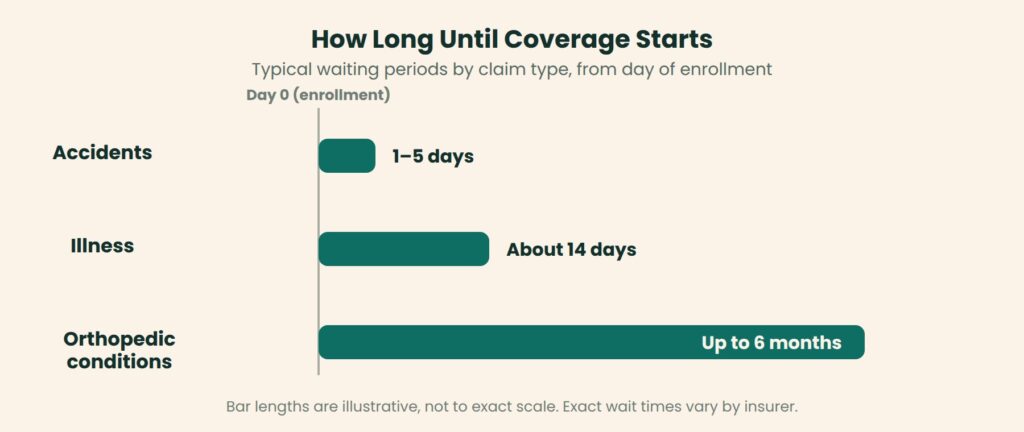
Waiting periods vary by policy. Insurers usually set different waiting periods for each type of claim:
- Accidents: typically the shortest, often somewhere between 24 hours and 5 days
- Illness: typically longer, commonly around 14 days
- Orthopedic conditions (like cruciate ligament injuries or hip dysplasia): often the longest, sometimes 6 months or more with some insurers, occasionally waivable with a vet-certified exam showing no prior signs
The exact numbers vary meaningfully from one company to the next, which makes this one of the details worth confirming directly rather than assuming it matches a plan you’ve had before.
Why Waiting Periods Exist
From the insurer’s perspective, the logic is straightforward. Without a waiting period, someone could enroll a pet after it becomes visibly injured or sick and file a claim immediately. That would be similar to buying car insurance after an accident has already happened. The waiting period exists to make sure coverage is for genuinely new, unforeseen problems — not conditions that already existed before the policy took effect.
The longer orthopedic waiting period specifically exists because these conditions (especially cruciate ligament tears) can sometimes be hard to fully rule out on a single exam, and they represent some of the more expensive claims in the industry.
What If Your Pet Gets Hurt While You Wait for Coverage?
If your pet has an accident or develops an illness during the waiting period, the insurer will typically treat that condition as a pre-existing condition. The insurer will usually exclude that condition from coverage permanently, even after the waiting period ends. This is true even if it happens on day 13 of a 14-day illness waiting period.
This is exactly why timing your enrollment matters. Start coverage well before you need it, rather than right before a planned activity. This gives the waiting period enough time to end before your pet faces any known risks.
Providers With Shorter Waiting Periods
Waiting periods are genuinely one of the more comparison-worthy details between insurers, since a policy with a 3-day accident wait and a 14-day illness wait behaves very differently in practice from one with a 15-day wait across the board. Some insurers also allow a veterinary exam shortly after enrollment specifically to waive or shorten the orthopedic waiting period, which is worth asking about directly if you’re insuring a breed with known joint risk.
A Worked Example: Three Timelines
Assume a policy with a 2-day accident wait and a 14-day illness wait, in line with the typical ranges above (check your own policy for its exact numbers). The standard settings are a $500 deductible and 80% reimbursement. All three dogs are enrolled on the same day.
| What happens | When | Bill | Result |
|---|---|---|---|
| Dog A eats a sock and needs surgery | Day 1 | $3,000 | Inside the accident wait: excluded, you pay $3,000 |
| Dog B gets an ear infection | Day 10 | $400 | Inside the illness wait: excluded, and likely treated as pre-existing afterward |
| Dog C eats a sock and needs surgery | Day 20 | $3,000 | Covered: ($3,000 − $500) × 80% = $2,000 paid, you pay $1,000 |
The difference between Dog A and Dog C is $2,000, decided only by timing. Enrolling a few weeks before you need coverage, not after, is the only way to avoid this. Foreign object removal costs $800 to $5,000 according to BestMoney. For the related rules on existing conditions, see pre-existing conditions.
Frequently Asked Questions
Can I do anything to shorten the waiting period? Generally no for standard accident and illness waits, though some insurers waive the longer orthopedic waiting period with a clean vet exam shortly after enrollment.
Does the waiting period restart if I add a pet to an existing multi-pet policy? Yes. Each pet starts their own waiting period when you add them to the policy. Their waiting period does not start from your original enrollment date.
Is it worth enrolling right before a risky event, like a hiking trip, even if the waiting period hasn’t passed? Not really. The policy won’t cover anything that happens during the waiting period, so you won’t have active protection for that trip.
The Bottom Line
Waiting periods are one of the most overlooked details in pet insurance, mostly because they only matter the moment something goes wrong right after enrolling. Reading the specific wait times for accidents, illness, and orthopedic conditions before you sign up — and enrolling with enough lead time for them to pass — is what actually determines whether your policy is protecting you on day one or several weeks later.
Sources
- Healthy Paws, Embrace and Trupanion official sites, checked October 13, 2026: each publishes its own waiting periods, which differ by company and plan.
- BestMoney via MediaFeed, The 17 Most Common Pet Health Issues Will Set You Back This Much.
- MoneyGeek, Average Pet Insurance Cost for Dogs, updated September 17, 2026 (standard policy settings).